Drive
4WD skid-steer
A four-wheel skid-steer UGV. We designed and built it as a research platform for autonomy on grass, gravel, and slopes. It costs much less than a commercial platform.

An outdoor research robot for autonomy work is expensive. A Clearpath Husky costs more than $20,000. Much of that price is for the strong structure and the assembly work. Careful design can give the same result for less money, and SMUB is that result. We made the model in Fusion 360, then built it from aluminum extrusion and standard parts. Every subsystem is easy to open, to understand, and to change. Each solution showed us the next problem. The revision history below records those changes.
The navigation software has its own page: SMUB autonomy, an off-road and multi-level stack built and benchmarked in simulation.

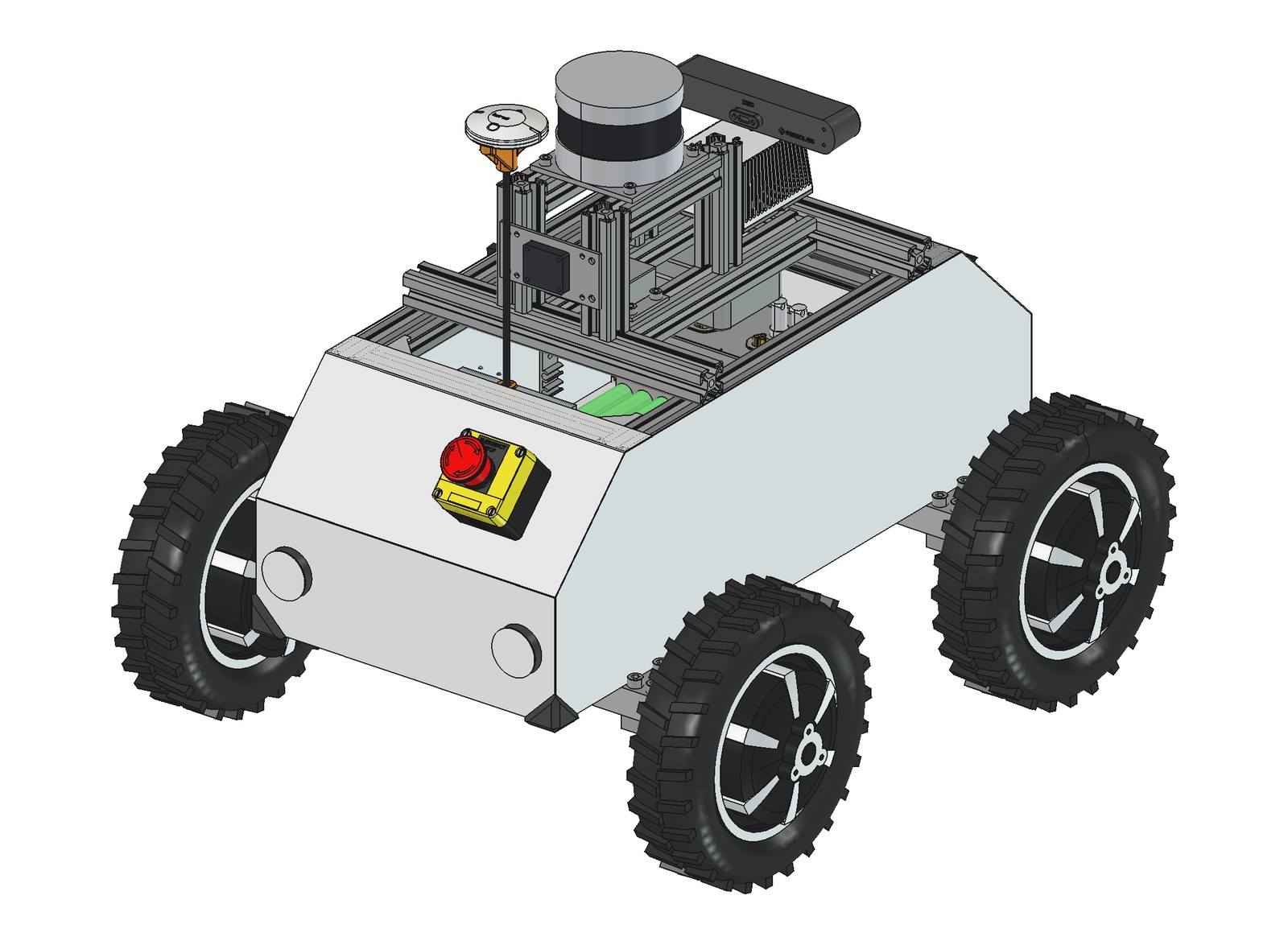
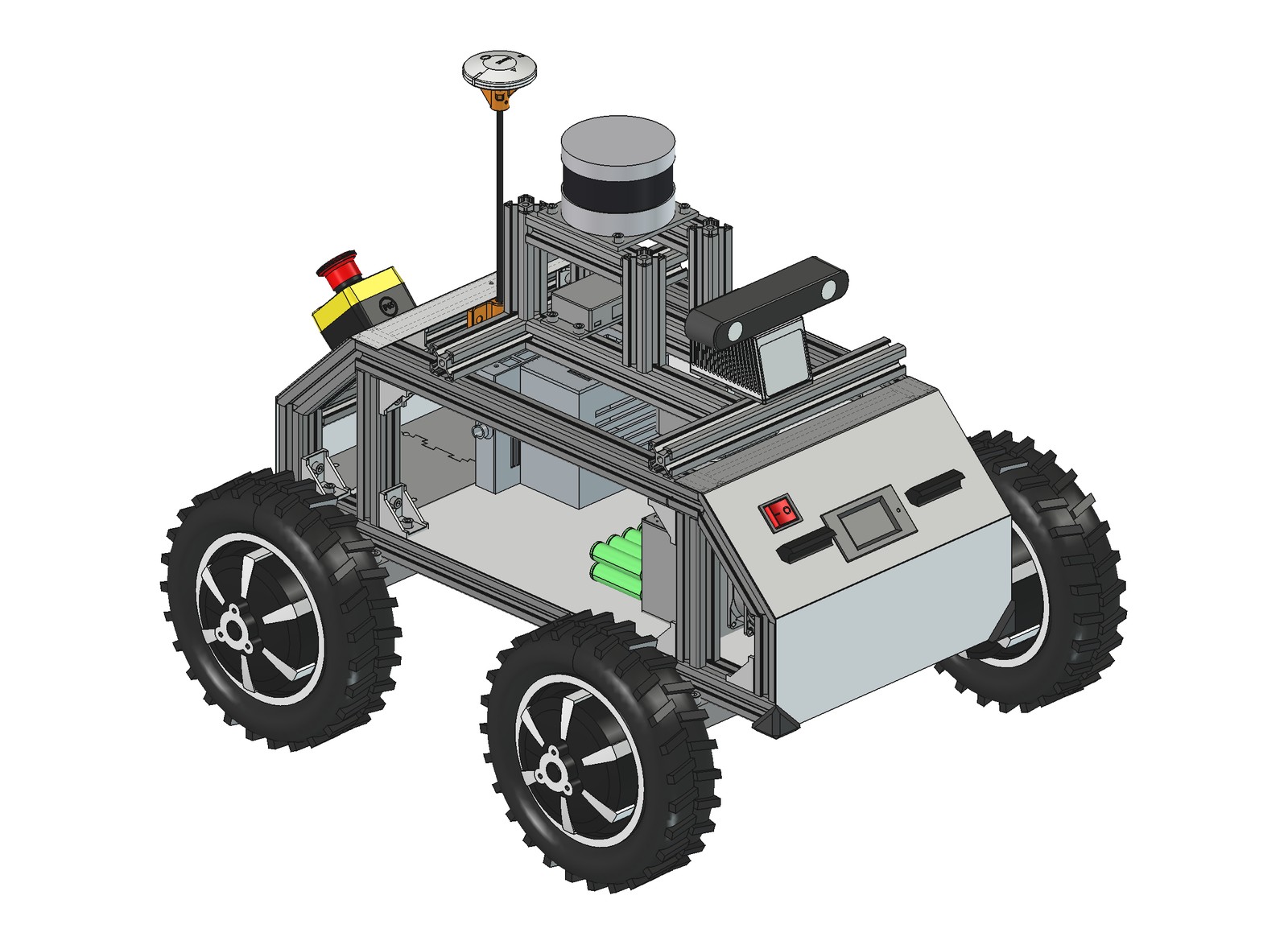
The chassis is 30×30 mm aluminum T-slot extrusion with 1 mm sheet panels. Brackets, T-nuts, and 3D-printed mounts hold it together. We designed all of it in Fusion 360 and assembled it with hand tools. One or two persons can lift the frame. It is also rigid enough to carry a full sensor and computer payload on rough ground.


The computer function is in two parts. A Raspberry Pi 4B controls the actuation and the vehicle services. An NVIDIA Jetson AGX Xavier does the perception and the odometry. The two computers send data to each other on a ROS 2 network. One CAN bus carries all of the motor control. Both ODrive boards and the ESP32-S3 co-controller share that bus. Therefore the ESP32-S3 can drive the wheels before the Raspberry Pi starts.

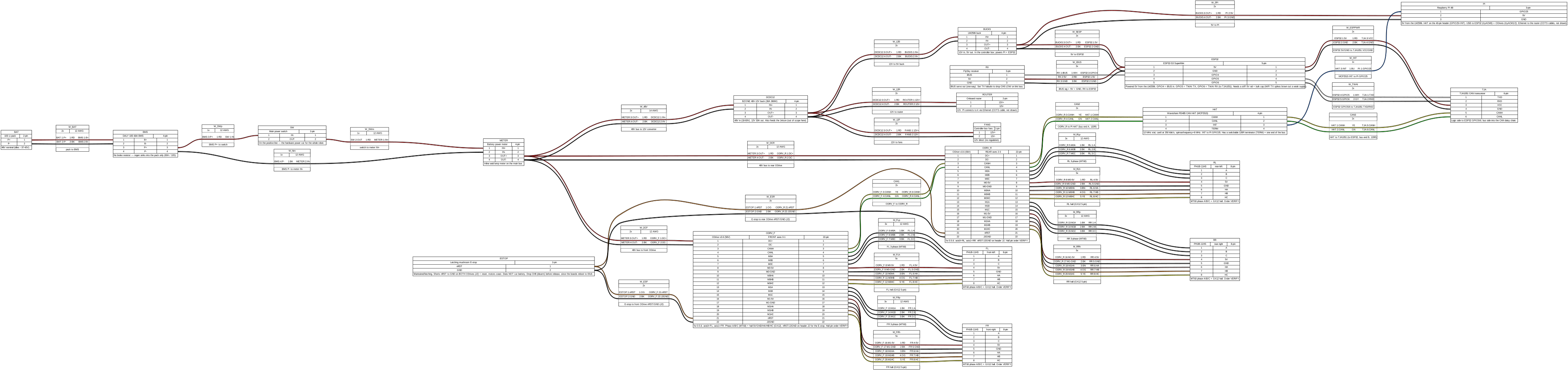
The E-stop pulls the ODrive nRST line. It does not disconnect the battery. The motors then turn freely, and the boards restart in the IDLE state when you release the switch. This is fast, and it keeps the battery connection safe under load.
SMUB has no brake resistor. The regenerative current goes into the 10S battery pack. A dc_max_negative_current limit keeps the bus voltage in the safe range during deceleration.
The hall encoders use GX12 screw-lock connectors. The motor phases use MT60 connectors. If a hall connection becomes loose during a drive, the wheel turns without control. Therefore each connector has a key and a mechanical lock.
The CAN bus operates at 250 kbit/s with a 120 Ω resistor at each end. The ESP32-S3 and the Raspberry Pi share the bus. They send a heartbeat message to each other. Control moves between them without an interruption, and the robot always has a controller.
We changed each subsystem several times. This section shows each change as a revision.
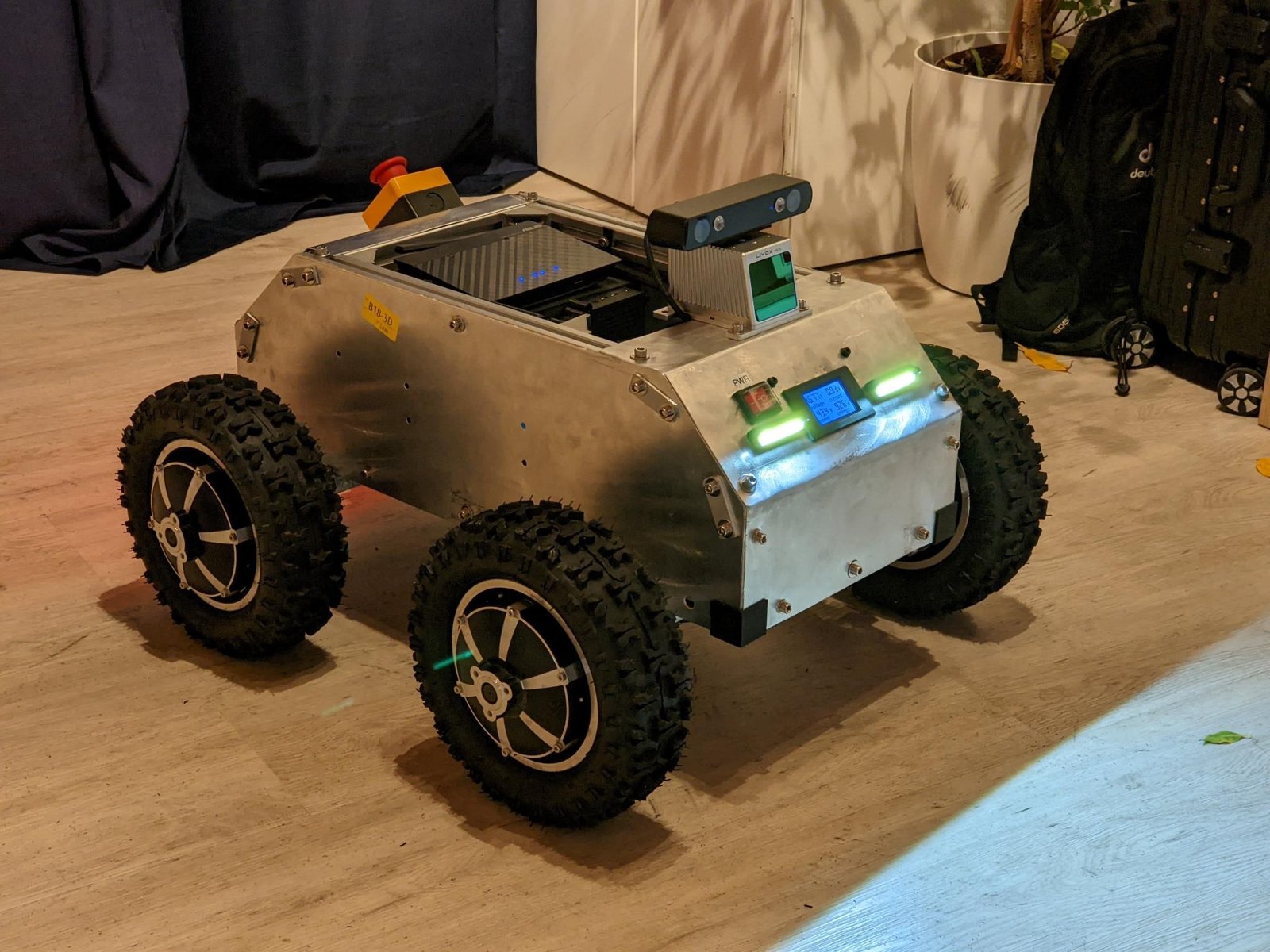
The commercial platforms in this class are the Clearpath Husky A300 and the AgileX Scout 2.0. Both are 4×4 skid-steer bases for outdoor research. SMUB has the same drive layout and a higher speed for much less money. It does not have the ratings and the support that a manufacturer supplies.
| Spec | SMUB | Husky A300 | Scout 2.0 |
|---|---|---|---|
| Drive | 4×4 skid-steer | 4×4 skid-steer | 4×4 skid-steer |
| Dimensions L×W×H | 670×643×361 mm | 990×698×381 mm | 930×699×349 mm |
| Top speed | 12 km/h | 7.2 km/h | 5.4 km/h |
| Rated payload | not rated | 100 kg | 50 kg |
| Ingress | not rated | IP54 | IP22 |
| Platform | open, serviceable | closed, integrated | closed, integrated |
| Indicative price | ≈ $2,000 parts | ~$20,000+ | ~$12,000+ |
The commercial figures are the specifications of the base platform from each manufacturer. The prices are approximate and change with the configuration. SMUB has no rated payload, no IP seal, no warranty, and no support. In exchange, it costs less, it is open, and you can change each subsystem.
We write an open-source build manual for the wiring, the bill of materials, the firmware, and the ROS 2 stack. The manual is the full reference for this page.